
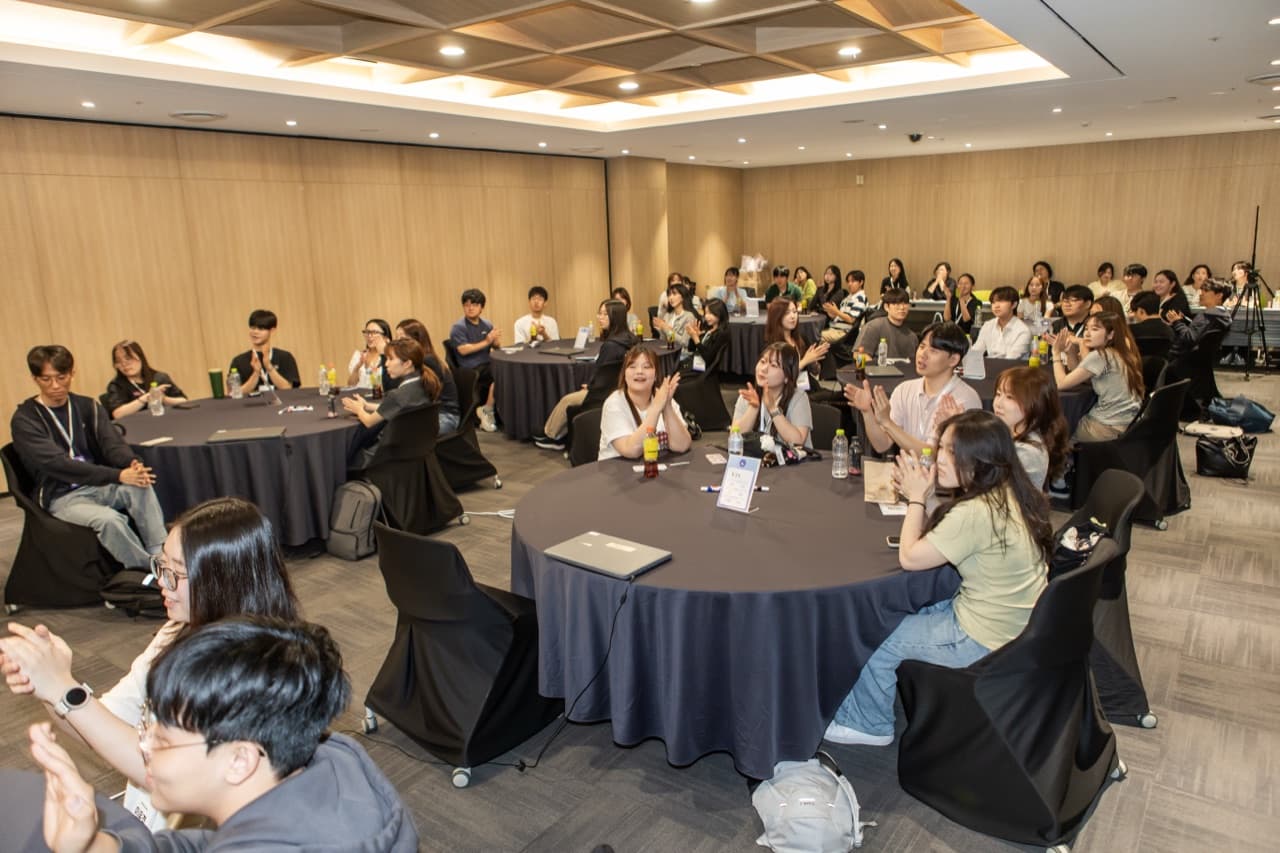
They only became a team after the icebreaker. Ajou University College of Medicine, Ajou University College of Nursing, Hwaseong University of Health Sciences social welfare department. Students from three schools mixed into 10 teams of six. June 22, 2026, Suwon Convention Center Hall 401. zzzarit delivered this educational event through a direct-award contract, running the day — PM, MC, photography, QR name badges, and team placards.
What IPE is
IPE — Interprofessional Education. In real healthcare, no one works alone. A patient with complex needs involves a doctor, a nurse, and a social worker at minimum. This program puts students from those three disciplines in the same room, working the same case, before any of them graduate.
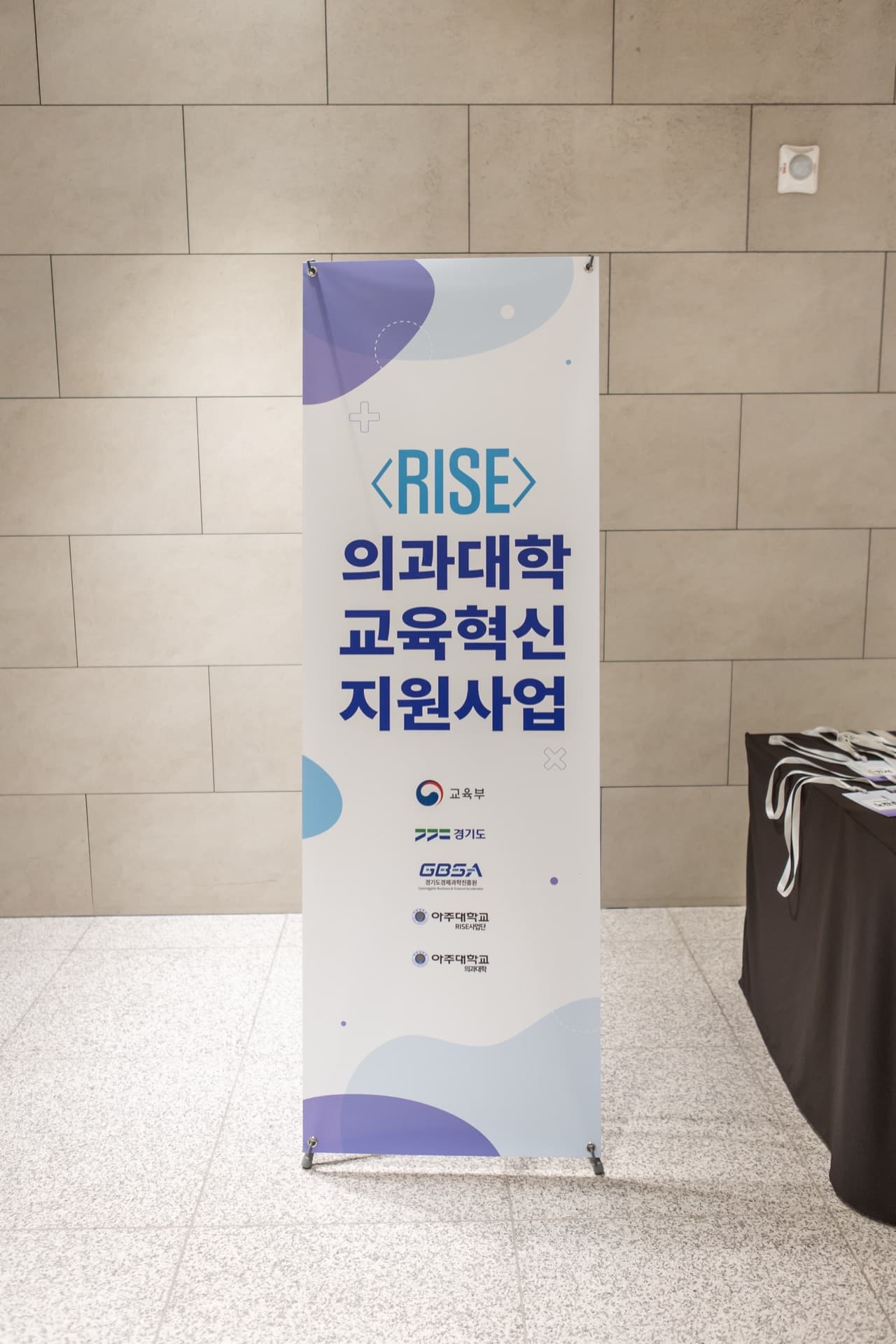
The program is part of the Ministry of Education's RISE (Regional Innovation System & Education) project — specifically the Medical Education Innovation Support track under Ajou University's RISE Project. It's not an elective workshop. It's structured curriculum, funded to produce real collaboration competency.
How the day went
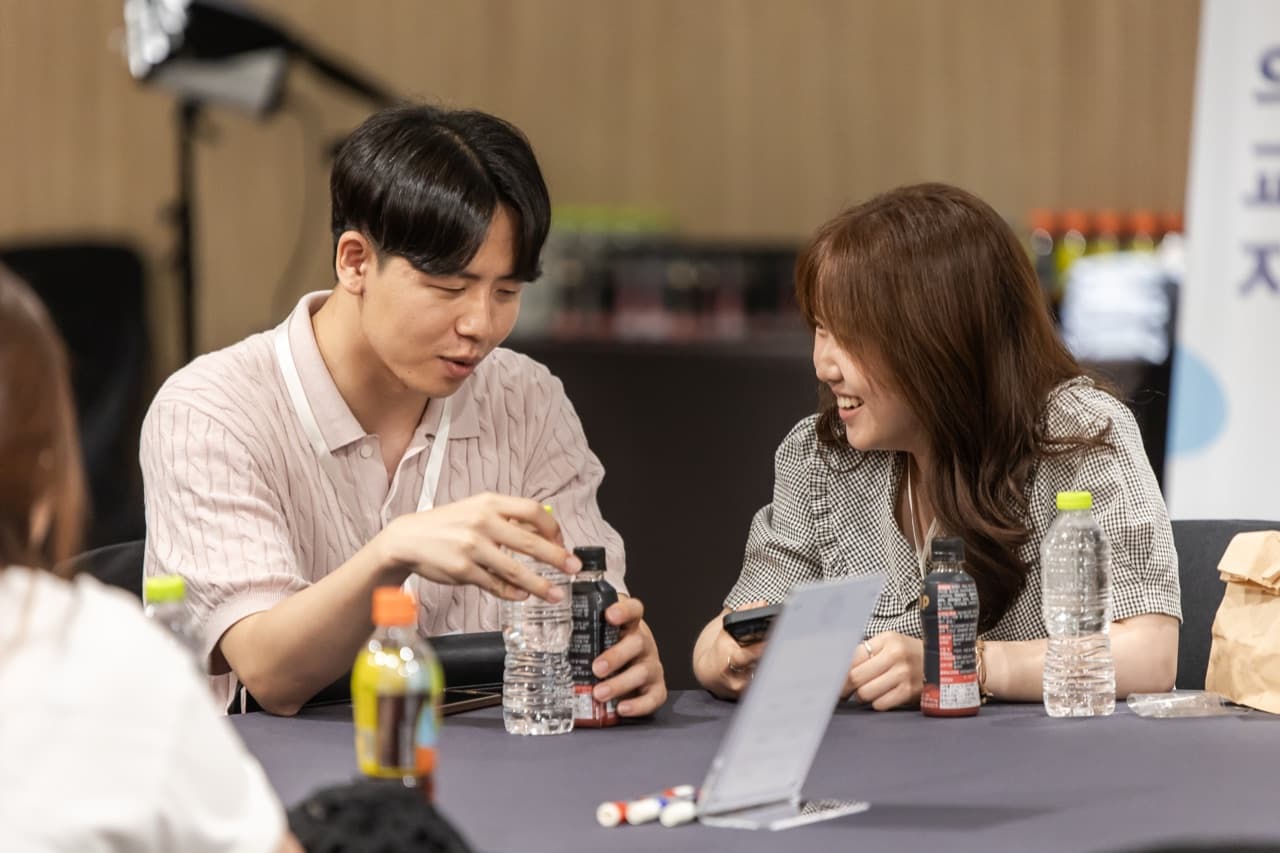
Orientation at 10 a.m. An hour and ten minutes of structured icebreaking — three schools, strangers at first, a functioning team by the end. Then straight into case-based learning: each team analyzed a case of an elderly person living alone, identifying medical, nursing, and social needs across disciplines.
What the medical student noticed was different from what the nursing student noticed — and different again from what the social welfare student saw. That difference was the point. CBL sessions work precisely because each major has a different frame. The task was to integrate them.
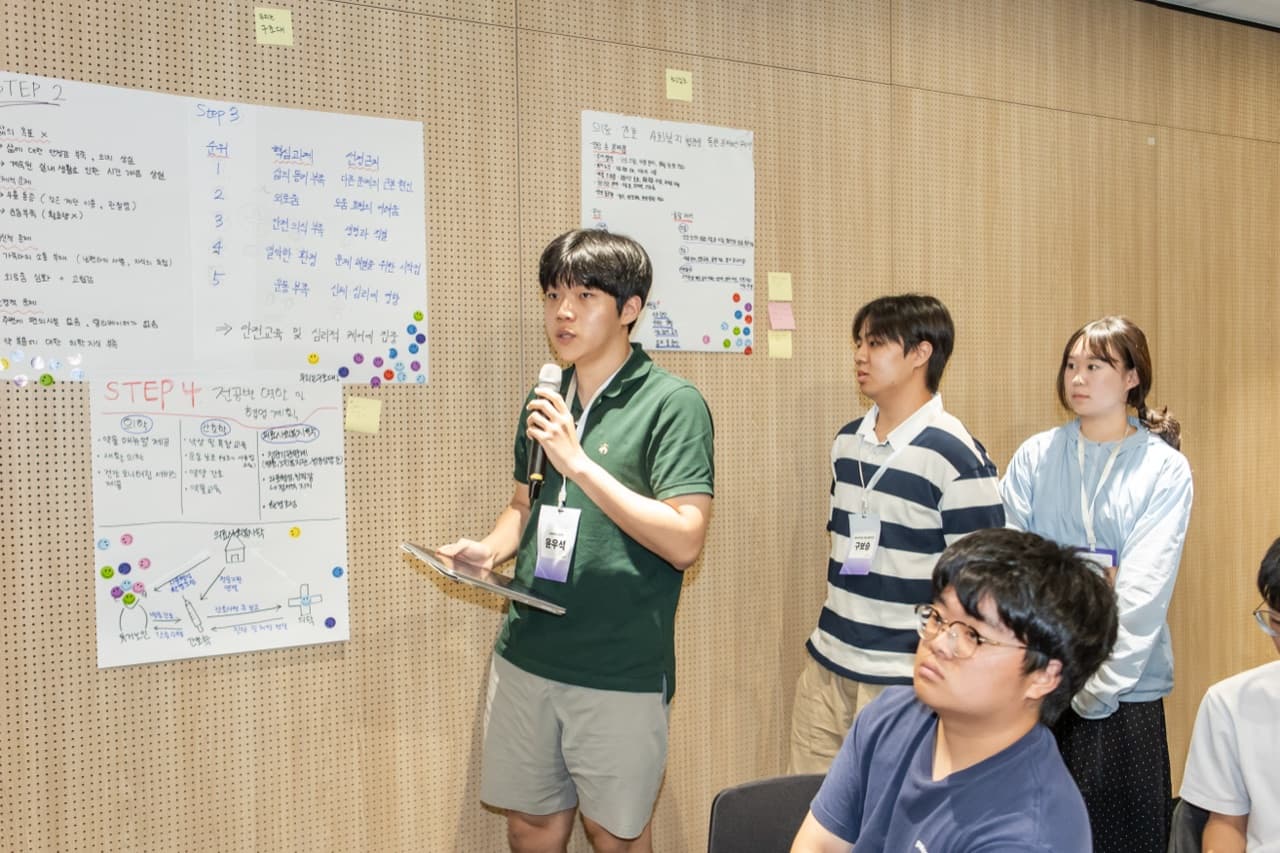
Afternoon: gallery walk. Each team's findings went up on the wall in large format. Teams rotated, read each other's work, and left written feedback. One team's blind spot was another team's focus. The aggregated output from 10 teams across 10 tables held more than any single team could have produced.
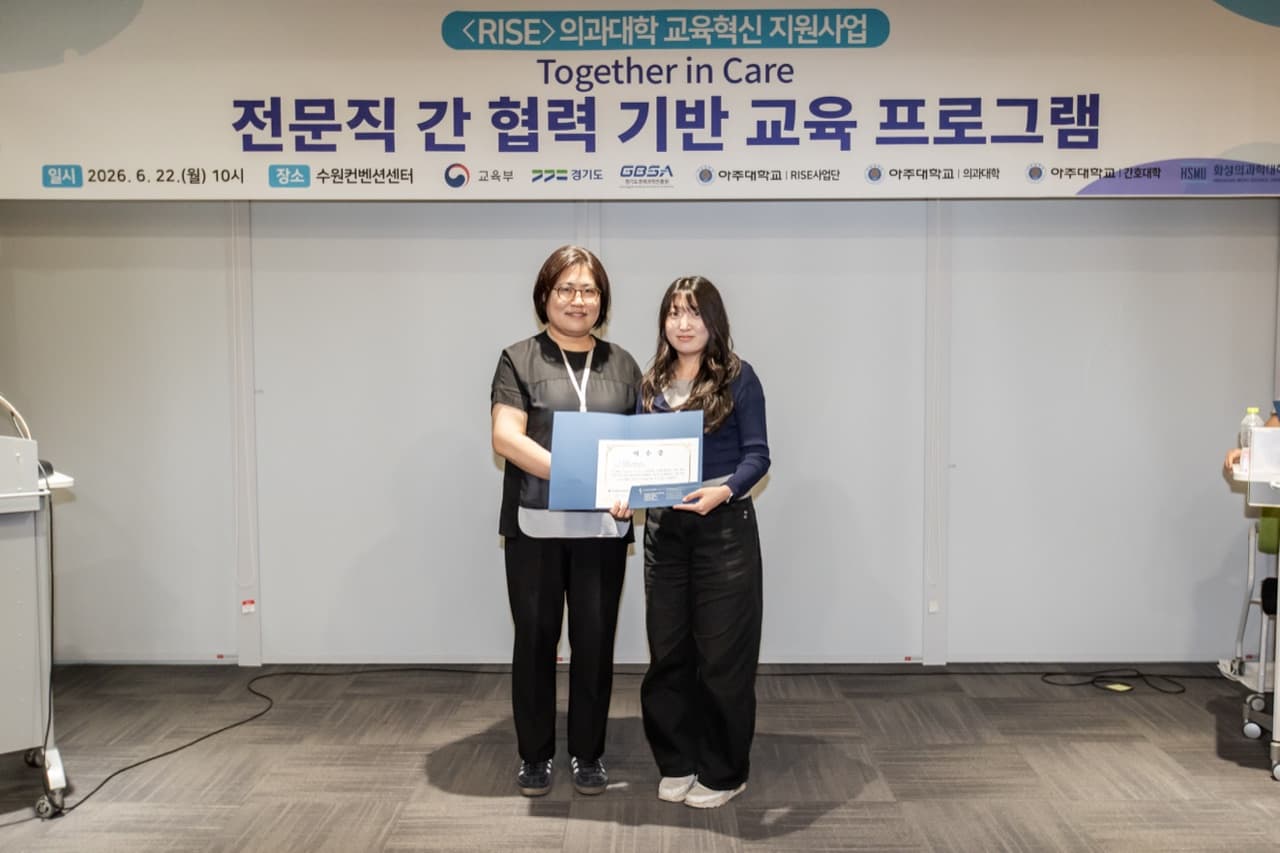
Team presentations, debrief, and a certificate ceremony at 4:15 p.m. closed the program. The certificate wasn't ceremonial — it documented participation in a formal interprofessional education program under the RISE Medical Education Innovation track.
What zzzarit handled
For an education program with this much structure, the logistics have to be invisible. Participants are supposed to think about the patient case, not about where to sit or who their MC is or whether their badge scans correctly.
- PM — pre-event coordination, venue liaison, day-of operations management
- MC — icebreaking facilitation, session transitions, certificate ceremony hosting
- Photography & video — professional crew, full program coverage
- QR name badges — printed for all 60 students and faculty, individually coded
- Team placards — 10 laser-engraved table placards identifying each team
Name badge QR codes weren't just for identification — they allowed real-time attendance tracking and simplified post-event record-keeping for the academic program. The 10 team placards kept seating assignments visible at a glance throughout the day.
“One day for future doctors, nurses, and social workers to learn to work together. zzzarit made sure that day ran.”
— June 22, 2026 / Ajou University College of Medicine × zzzarit
What the project owner said
Real client feedback with its connection to this case and publication scope confirmed.
“Even when I had to step away from the venue, zzzarit kept everything moving. I could genuinely trust them to handle it.”
FAQ
What is IPE (Interprofessional Education)?
IPE (Interprofessional Education) is a structured curriculum that brings students from medicine, nursing, and social welfare together to analyze real patient cases as a team. The goal is to build collaborative competency before they enter clinical practice. The program at Ajou University is part of the Ministry of Education's RISE Medical Education Innovation Support Project.
Which schools participated in this IPE program?
Students from Ajou University College of Medicine, Ajou University College of Nursing, and Hwaseong University of Health Sciences (social welfare department) participated — 60 students total, organized into 10 teams of six.
What did zzzarit handle at this event?
PM (pre-event coordination and day-of operations), MC (icebreaking, session transitions, certificate ceremony), professional photography and video, QR-coded name badges for 60 students and faculty, and 10 team table placards.
What were the QR name badges for?
Each badge carried an individual QR code for identity verification and attendance tracking. This simplified real-time tracking during the program and post-event record-keeping for the academic RISE project.
When and where was the IPE program held?
June 22, 2026 (Monday), at Suwon Convention Center Hall 401, Gyeonggi Province.
Can zzzarit manage educational programs and workshops?
Yes. This IPE program is a clear example: structured educational content, multiple schools, 60 participants across 10 teams, QR-based tracking, MC, photography. Any educational event with complex logistics is within zzzarit's scope. Contact us for a free consultation.