
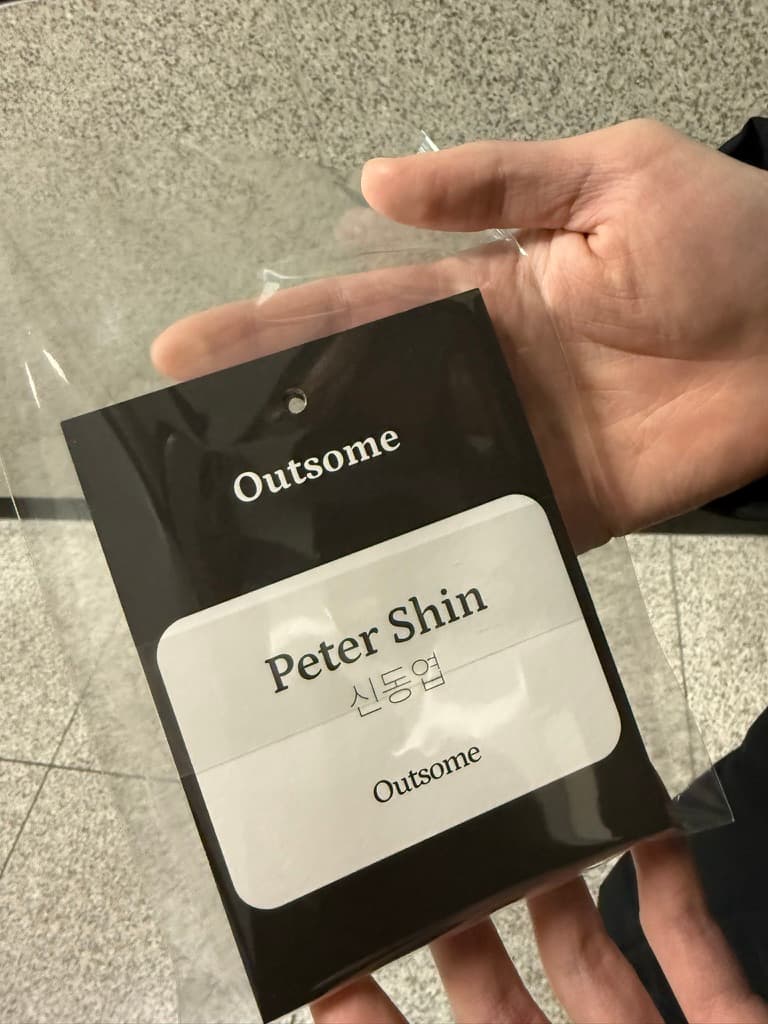
Year-end networking events tend to look the same. People who already know each other cluster first, and newcomers stand near the wall holding a drink. A few cards change hands, and by next week nobody knows where they are. This piece is about handling both problems — the friction of exchanging, and the guests nobody reaches — with a single badge.
Why business cards disappear after a year-end event
Handing one over means digging through a bag, and the cards you receive pile up in a pocket. The moment you leave the venue, remembering who was who is on you. Some people photograph them instead, which only moves the pile into an unsorted camera roll. At a holiday party with food and drinks in hand, the whole motion is even more awkward.
- Paper cards — pull one out, take one back, stack them up, lose them. Nothing records what you actually talked about.
- QR codes — open the camera, scan, tap the link: three steps, and dim party lighting makes scanning unreliable.
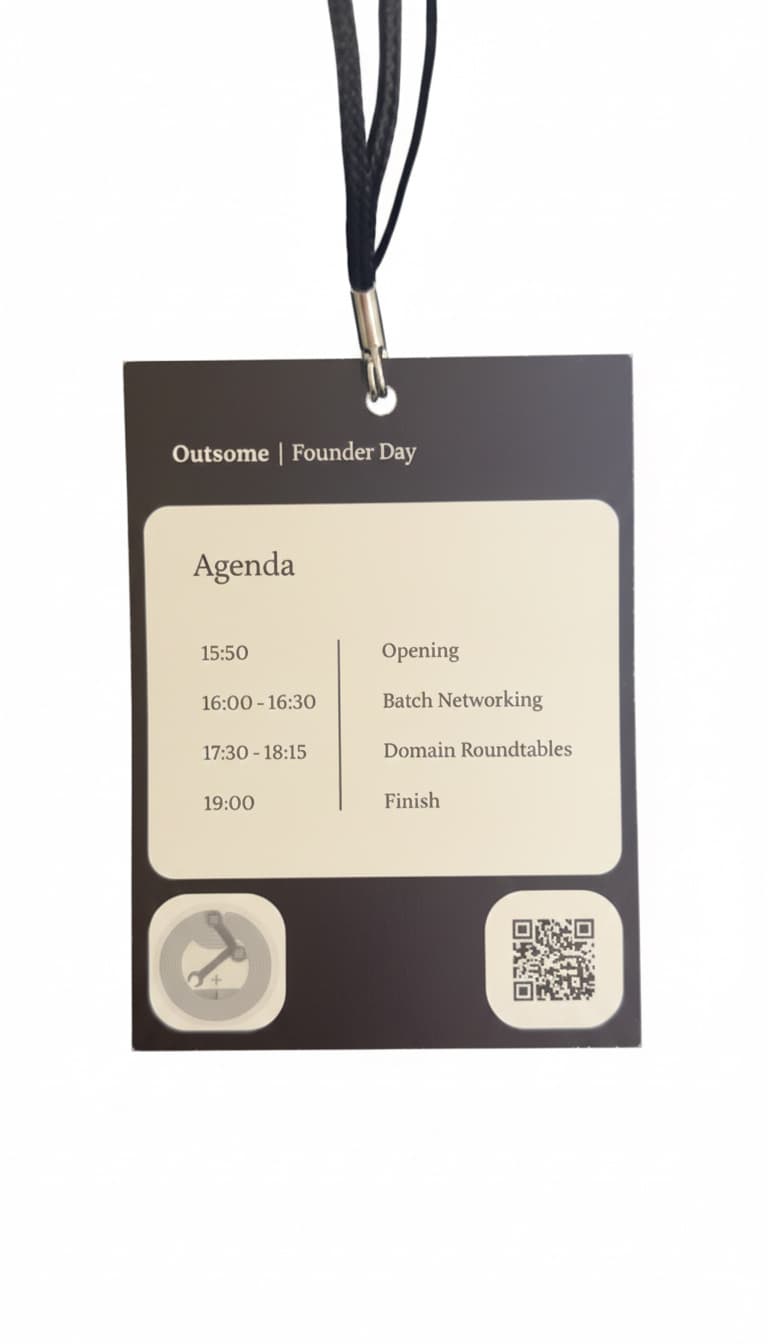
- NFC badges — hold your phone against the badge and you are done, the same motion as a transit card, with no app to install.
What is an NFC badge and how does it work?
An NFC badge is an attendee badge with a thin NFC sticker or card inside. Hold an NFC-enabled phone against it and the other person's public profile, company details and materials open in the browser, with no app install and no camera. The principle is the same as an NFC business card or digital business card, except it rides on the badge the guest is already wearing. Even the guest who forgot their cards is connected on the spot.
Decide what the badge opens based on the goal of the event: a company page, a personal profile, a downloadable file or a survey link each change the preparation and the production schedule. The structure and mechanics are covered in more depth in what NFC badge networking is.
The real problem at a holiday party is the guest by the wall
Easier exchanges alone do not make networking work. Every event has someone who leaves without meeting a single person. The problem is that organizers only learn this after the night is over, if ever. The satisfaction survey just says it was nice.
Once exchanges are recorded, that changes. Because every hello leaves a number, you can find the guest who is still at zero while the party is running. When a host personally introduces them to someone with an overlapping interest, that one introduction changes their entire evening. Turning networking from luck into design is covered in a coffee break is not networking.
What does the live networking status look like to an operator?
Below is a sample built with fictional event data. On the left is the live status an operator watches; on the right is the report a guest receives after the event. Move the timeline forward, then compare how the closing result differs when the host follow-up is used and when it is not.
How the Outsome Founder Sprint used it
At the Outsome Founder Sprint, a room full of startup founders on 24 November 2025, we put NFC on the back of every badge. On site, the exchange itself mattered less than how the host used the record to run the program.
“It was a room full of founders exchanging cards, and networking got noticeably livelier once guests started tapping the NFC badges with their own phones. We gave a prize to the person with the most taps, and used the live view to find the person with the fewest and give them a minute to pitch on stage. It covered even the guests who would have been left out — exactly what the event needed.”
— Outsome Founder Sprint organizer · verified project review
A prize for the most exchanges, a minute on stage for the fewest. The same data used as an opportunity rather than a penalty. That is how you quietly fill the gaps for the people nobody reached.
What is left for guests the next morning?
When the party ends, every guest receives the list of people they met: in the order they met them, with names, organizations and a profile link they can reopen. The guest organized nothing and still gets an organized list, and the organizer can report how many connections happened instead of saying the room felt good.
- Guests — nothing to photograph or retype; the list keeps the order you met people in.
- Organizers — total exchanges, average connections per guest and the number of people who never connected, all usable in the event wrap-up report.
- Sponsors — report who they met at the booth instead of how many people walked past.
A seven-point checklist for your year-end networking event
- 1Put a number on the networking goal. Something like 'three new connections per guest' makes the design and the review possible.
- 2Explain what gets recorded at registration and collect consent. Exchange records depend on guest identification and consent.
- 3Decide what the badge opens first. A company page, a personal profile or a downloadable file each need different preparation.
- 4Start badge production about three weeks out. Year-end printing and material schedules fill up first.
- 5Name the person who will watch the live view. A screen with nobody acting on it leaves the quiet guests exactly where they were.
- 6Treat 40 minutes before closing as the last moment to intervene. After that, people are already leaving.
- 7Set the follow-up time in advance. Between the end of the event and the next morning is when guests actually open it.
Program ideas that pair well with a year-end party
- Most-connected prize — award the guest with the most exchanges at the close. The data becomes the run sheet.
- One-minute pitch — give the guest with the fewest exchanges a minute on stage. Isolation becomes an opportunity, not a penalty.
- Tag missions — 'exchange with three people from another team' gives everyone a reason to start the first conversation.
- Interest badges — a line of role and interests under the name, colour-coded by track. The badge supplies the opening line.
- Activity booths — a queue at a photo booth or quiz kiosk starts conversations, and the printout becomes the souvenir of the night.
- Live screen — put exchange counts or guest messages on a display wall to build the room's energy.
FAQ
Does a year-end networking event really need NFC badges?
They help most when you have more than 30 guests and many of them are meeting for the first time. The friction of pulling out a card disappears, and you can see during the event who has not connected. For a group of about 20 people who already know each other, badge design, seating and the run sheet may be enough.
How is an NFC badge different from an NFC or digital business card?
The technology is the same. An NFC business card is something a person carries every day, while an NFC badge adds the same function to the attendee badge used only at that event. Guests are already wearing it, and the organizer decides per event what the profile shows and whether exchanges are recorded.
Do guests need to install an app?
No. Holding an NFC-enabled phone against the badge opens a web page directly, with no app, camera or sign-up. For devices without NFC support, the same address is often printed as a QR code on the badge.
What is required to record who met whom?
Opening a public profile and recording an exchange are different things. Recording requires guest identification and consent, designed into the event during preparation. Explaining what is recorded and how long it is kept on the registration screen is the baseline.
Who watches the live networking status screen?
Usually the organizer, the host running the program and on-site staff. Individual guests are not shown other people's tap counts. The point is to use it as an operating tool for finding guests who need an introduction.
When and how is the post-event list sent?
Between the end of the event and the following morning gets the best response. Each guest receives the names, organizations and profile links of the people they exchanged with, limited to what those guests agreed to share in advance.
How does this fit into a holiday party program?
Common patterns are a prize for the most exchanges, a one-minute introduction for the guest with the fewest, and missions such as exchanging with three people from another team. At the Outsome Founder Sprint, the host used the live view to assign both the prize and the pitch slot on the night.
How much lead time and budget does it take?
It depends on headcount, badge quantity and design, and whether recording and reports are included. Year-end printing and material schedules are crowded, so we recommend starting about three weeks before the event date. zzzarit does not publish prices but does publish its quoting rules, and the exact figure is sent as an email quote once you share the date and headcount.
Can we order only the badges, or full event operation as well?
Both. You can order NFC badge production and delivery alone, or bundle registration, QR check-in, on-site content and running the program as full event operation. We leave whatever you have already decided in place and fill only the gaps.